Highlights from the Eastern Partnership Youth Conference: Bringing youth civic spaces at the forefront


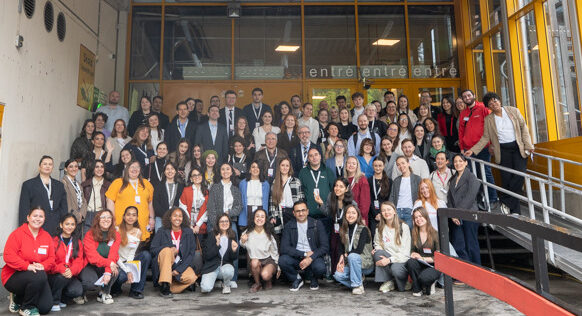
On May 13th we welcomed the participants of the Eastern Partnership Youth Conference.
About the conference
The Eastern Partnership Youth Conference 2026 “Enlarging youth civic space in the Eastern Partnership” took place from May 12-13, 2026, in Stockholm and brought together over 100 representatives from national youth councils, civil society organizations, and partners from across the Eastern Partnership (EaP) region and the EU.
Fryshuset hosted the second day of the conference, organized by the Eastern Partnership Civil Society Forum, in partnership with the Swedish Ministry of Foreign Affairs, the European Commission, Forum Civ, Deutsche Gesellschaft für internationale Zusammenarbeit (GIZ) GmbH, EU4Youth – Tunisia, and the Olof Palme International Center.
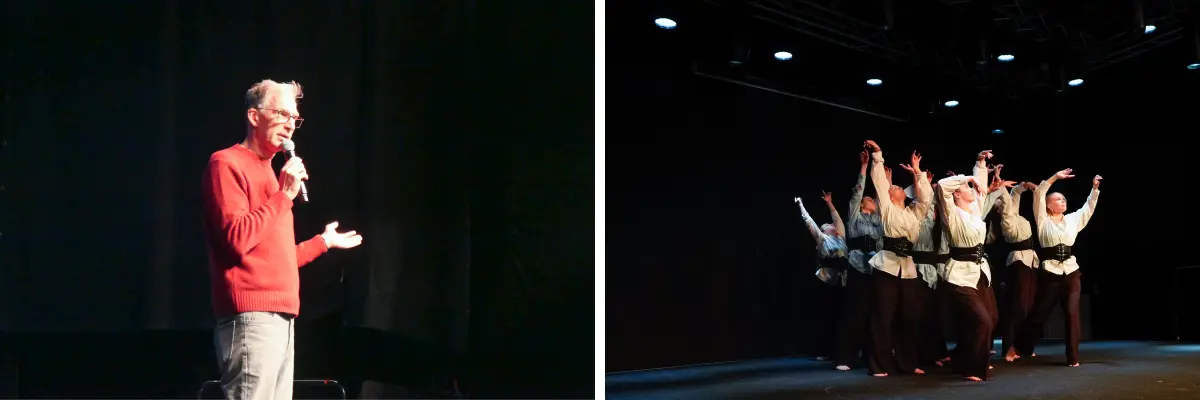
The programme started with a performance from Fryshuset Dance Center and a keynote speech from Fryshuset CEO, Johan Oljeqvist. It continued with a field visit of Fryshuset’s facilities, offering insights into Fryshuset’s work and engagement for youth participation and social inclusion, with guided tours conducted in English, Ukrainian, and Armenian.
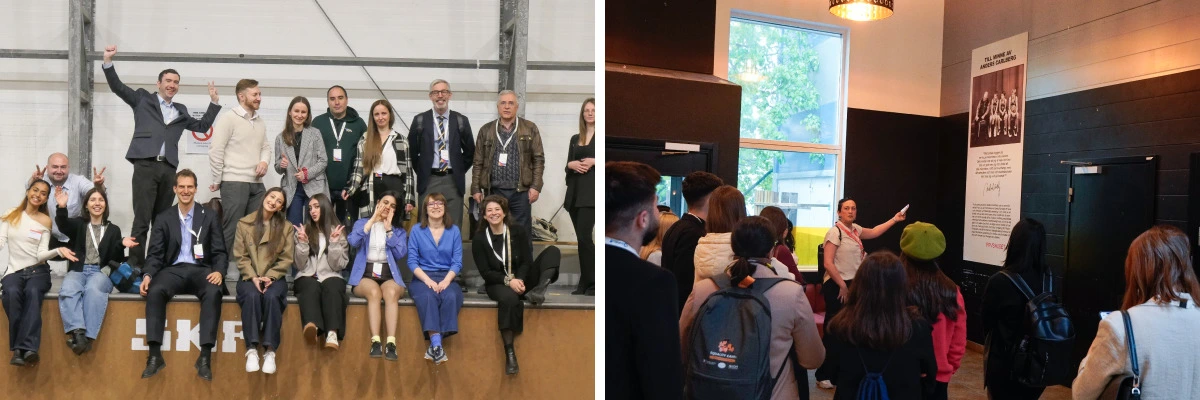
Following the visits, the results of the working groups from the first day of the conference were presented, highlighting how youth organizations can foster participation, inclusion, and active citizenship. The session addressed key issues related to youth participation and civic engagement across the EaP region. It highlighted the importance of youth work and youth policy, identified good practices and existing barriers to youth engagement, and explored possible ways to address these issues through recommendations addressed to youth organizations, governments, and the European Union.
“Civic spaces do not only mean spaces to be or safe places, it means places where we grow as human beings and where we develop younger imaginations” Johan Oljeqvist, Fryshuset CEO.
Insights from participants
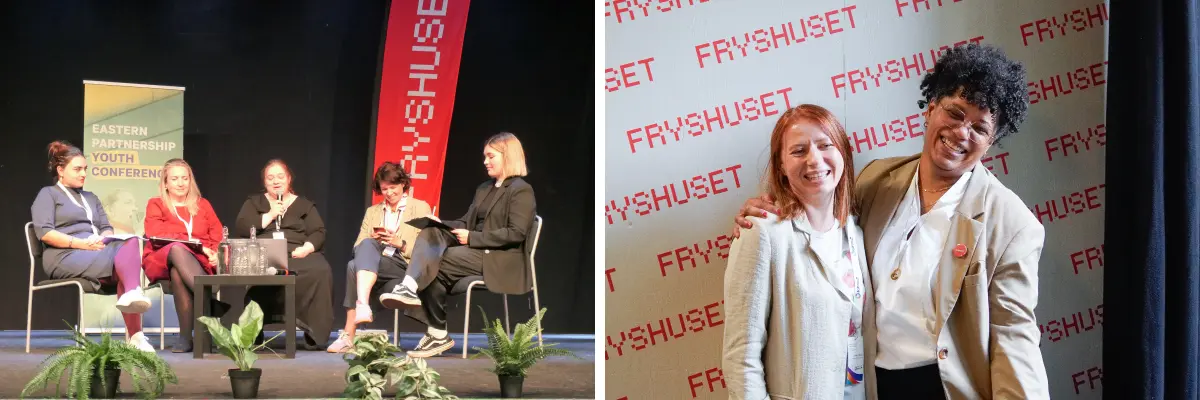
Alongside these discussions, through interviews with conference participants, young people were given the opportunity to share their thoughts on what are the most pressing issues at hand, when it comes to youth representation and engagement.
For Sofiya from Azerbajian, young people play an essential role by bringing new perspectives. “Young people should be more resilient, not stay silent and be a little more driven by their passion”.
Maria, from Belarus, advocates for increased mobility programs in the EU, as a way for young people to make connections and learn from other countries. For Natella from Georgia, young people should be provided with more physical spaces, to increase their opportunities to express themselves the way they are, share and meet with other young people.
“We are very important for the reality we have in our country and our society. Some people consider youth as the future, but I would say we are also now, we exist now, we have a say now.” (…) I believe each young person has something to express in a good way”.
Yet Jan, from Ukraine, regrets that information about youth activities and policies often stay within a limited circle, reaching mainly already active or privileged young people. He highlights the importance of reaching those with less access to information and those who are unsure about how to get involved. Moreover, for Anahit, from Armenia, it is equally important to support young people in first identifying and understanding the kind of change they want to bring. This encompasses emotional support, opportunities to develop their skills, and access to spaces for dialogue.
We need “to give validation to the young people, to believe in them, they should believe in their skills and competencies” Participant from Moldova.
That said, participants all emphasized that the power to bring change is in the hands of young people themselves.
“Everything is in kind of our hands, if we would like to make a change, we should do it ourselves, speak up about problems, raise questions about what we are caring about. Young people should take the first step and act in that moment”. Hovhannes, participant from Armenia
“Young people should know that they are the ones who have the chance or who have the right to make the world a better place to live”, Anahit, participant from Armenia